Why Do Older HVAC Systems Lose Efficiency Over Time?
June 28, 2026
Introduction
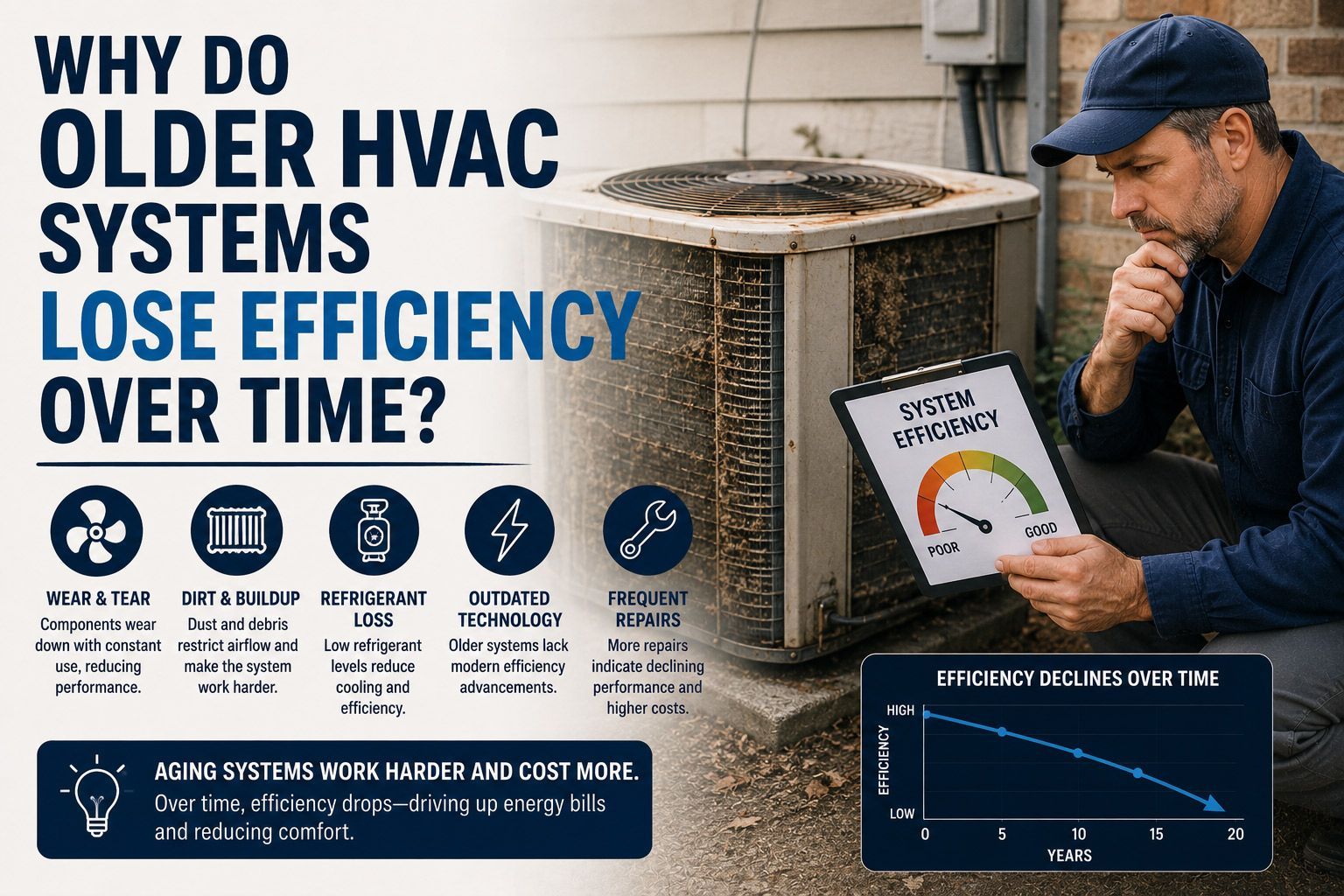
An HVAC system rarely becomes inefficient all at once. Most homeowners in South Jordan notice the changes gradually. The house takes longer to cool during summer afternoons, certain rooms never feel comfortable anymore, or winter heating bills slowly climb higher each year without any major breakdown happening.
The system still runs, but it no longer performs the way it used to.
That gradual decline happens because heating and cooling systems experience constant wear during normal operation. Airflow weakens, components lose performance, dirt buildup affects heat transfer, and older technology struggles to match the efficiency standards of newer equipment. In Utah’s climate, where HVAC systems handle both hot summers and cold winters, those efficiency losses become even more noticeable over time.
HVAC Systems Lose Efficiency Through Everyday Operation
Every heating and cooling cycle creates small amounts of wear throughout the system.
The blower motor starts and stops repeatedly, refrigerant pressures fluctuate, electrical components heat up, and airflow moves continuously through the duct system. Over the years, even well-maintained equipment slowly loses performance.
Moving Components Wear Down Gradually
Several HVAC parts experience constant mechanical stress, including:
- Blower motors
- Fan bearings
- Compressors
- Capacitors
- Belts and pulleys
As these components age, they often require more energy to perform the same workload they handled more efficiently when newer.
Performance Decline Usually Happens Slowly
One reason efficiency loss goes unnoticed is because homeowners adapt to the changes gradually.
A system that once cooled the house in 10 minutes may eventually need 20 minutes, but the homeowner experiences the change little by little over several seasons rather than all at once.
Dirt Buildup Reduces Heat Transfer Efficiency
Even small amounts of dirt inside an HVAC system can affect performance significantly.
Heating and cooling systems rely heavily on heat transfer. Once dirt blocks airflow or insulates internal surfaces, the system must work harder to move heat effectively
.
Dirty Coils Force the System to Work Harder
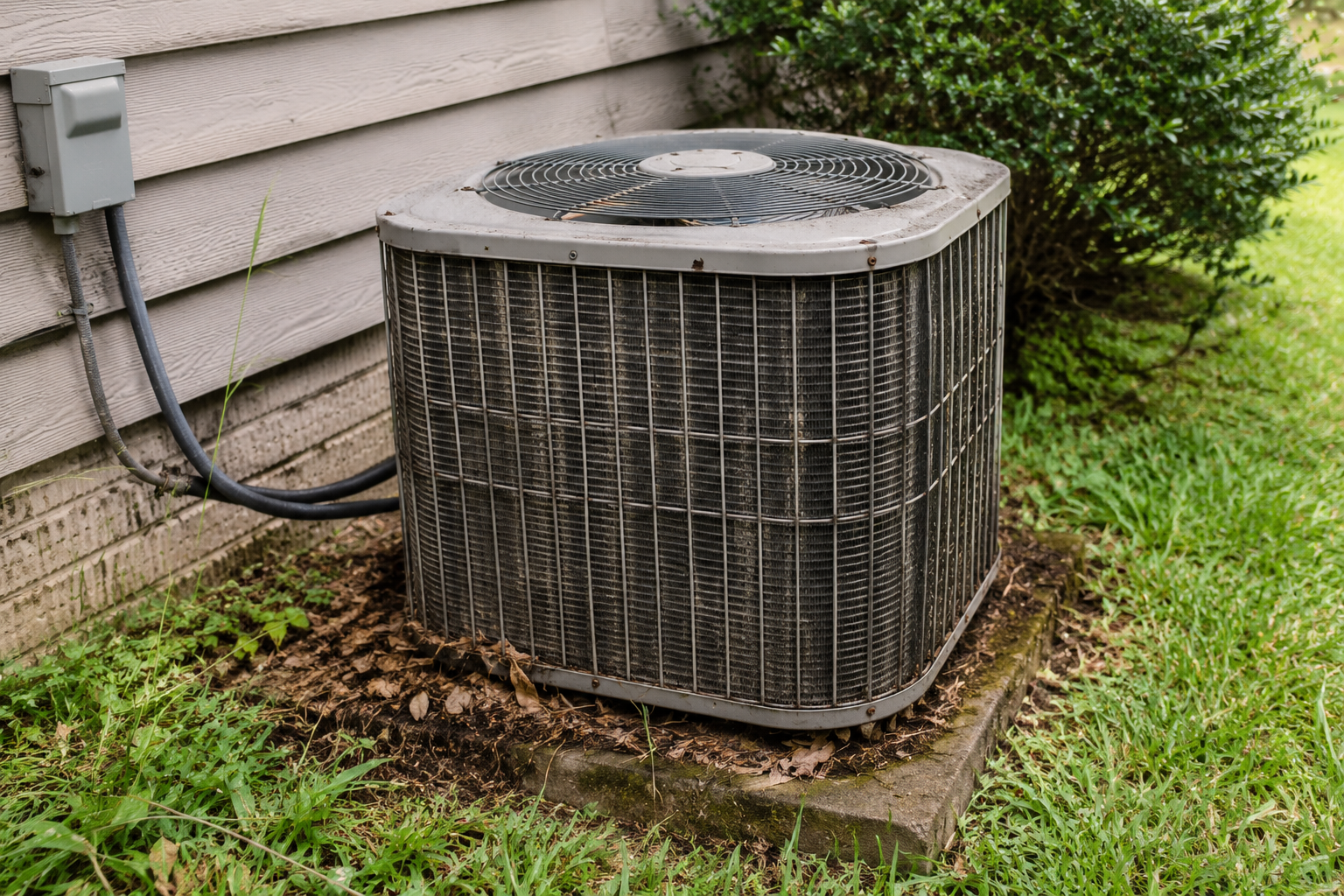
Both indoor and outdoor coils are vulnerable to buildup over time.
Common sources include:
| Type of Buildup | Where It Commonly Forms |
|---|---|
| Dust | Evaporator coils |
| Outdoor debris | Condenser coils |
| Pet hair | Airflow pathways |
| Grease and residue | Indoor components |
When buildup accumulates, the system loses its ability to transfer heat efficiently.
Restricted Airflow Increases System Strain
Airflow problems often develop from:
- Dirty air filters
- Blocked vents
- Duct restrictions
- Blower wheel buildup
As airflow weakens, the HVAC system usually runs longer trying to maintain indoor temperatures.
Older Refrigerant Systems Often Operate Less Efficiently
Many aging air conditioners in Utah still rely on older refrigerant designs that are less efficient than newer systems.
Refrigerant Performance Declines With System Wear
Even without major leaks, aging systems may lose efficiency because of:
- Reduced compressor performance
- Coil deterioration
- Refrigerant pressure imbalance
- Small refrigerant leaks over time
These problems reduce cooling effectiveness and increase operating strain.
Older Refrigerants Are Becoming Less Practical
Some older systems still use outdated refrigerants that are increasingly expensive and harder to service.
As systems age, homeowners may face:
- Higher repair costs
- Limited part availability
- Reduced service efficiency
- Increased operating expense
In many South Jordan homes, older refrigerant systems consume significantly more energy than modern high-efficiency equipment.
Ductwork Problems Become More Noticeable With Age
The HVAC equipment itself is not always the only source of efficiency loss. The duct system often contributes heavily to declining performance too.
Air Leaks Waste Heated and Cooled Air
Over time, duct systems may develop:
- Loose connections
- Small air leaks
- Insulation deterioration
- Crushed duct sections
When conditioned air escapes before reaching living spaces, the HVAC system must work longer to compensate.
Uneven Temperatures Often Point to Airflow Issues
Older duct systems sometimes struggle to distribute air evenly throughout the home.
This may cause:
- Hot upstairs rooms
- Weak airflow in certain areas
- Inconsistent heating and cooling
The HVAC equipment may still function, but the delivery system becomes less effective.
Electrical Components Become Less Reliable Over Time
Electrical wear is one of the most common reasons older HVAC systems lose efficiency.
Aging Components Struggle During Peak Demand
As electrical parts weaken, systems may experience:
- Harder startup cycles
- Inconsistent blower operation
- Reduced compressor performance
- Intermittent shutdowns
The system often continues running while consuming more energy during operation.
Capacitors and Contactors Commonly Degrade
Some of the most heavily used electrical components include:
| Component | Common Age-Related Problem |
|---|---|
| Capacitors | Weak startup performance |
| Contactors | Electrical resistance buildup |
| Relays | Inconsistent communication |
| Wiring connections | Heat-related wear |
These issues may not stop the system immediately, but they often reduce operating efficiency steadily.
Older HVAC Technology Is Less Efficient Than Modern Systems
Even a properly functioning older HVAC system may still use significantly more energy than newer equipment.
Technology improvements over the last decade have changed how efficiently heating and cooling systems operate.
Modern Systems Use Smarter Efficiency Controls
Newer systems often include:
- Variable-speed blowers
- Two-stage compressors
- Smart thermostats
- Advanced airflow controls
Older systems usually operate with simpler single-stage technology that cycles on and off less efficiently.
Temperature Control Has Improved Significantly
Modern systems are often better at:
- Maintaining stable temperatures
- Reducing energy waste
- Adjusting airflow automatically
- Managing humidity levels
As a result, homeowners upgrading older HVAC systems often notice both comfort improvements and lower utility usage.
Lack of Maintenance Accelerates Efficiency Loss
Every HVAC system naturally loses some efficiency with age, but poor maintenance speeds the process up dramatically.
Neglected Systems Accumulate More Stress
Without regular maintenance, systems may develop:
- Dirty coils
- Airflow restrictions
- Loose electrical connections
- Low refrigerant conditions
These issues force the HVAC equipment to operate under heavier strain year after year.
Small Maintenance Issues Compound Over Time
For example:
- Dirty filters reduce airflow
- Reduced airflow increases system runtime
- Longer runtime overheats components
- Overheated components wear down faster
What begins as a simple maintenance issue often contributes to larger efficiency decline later.
Utah Weather Creates Heavy Seasonal Demand
South Jordan HVAC systems work hard throughout the year because Utah experiences both cold winters and hot summers.
Seasonal Extremes Increase Wear
Heating systems may operate heavily during winter while cooling systems experience extended summer runtime.
That seasonal workload increases:
- Mechanical wear
- Electrical strain
- Airflow demand
- System cycling frequency
The more heavily the system operates each year, the faster efficiency decline may become noticeable.
Frequently Asked Questions About Older HVAC Efficiency
Why do older HVAC systems use more energy?
Aging components, dirt buildup, airflow problems, and outdated technology all reduce operating efficiency over time.
Can dirty coils really affect HVAC performance?
Yes. Dirty coils reduce heat transfer, forcing the system to work harder during heating and cooling cycles.
Why does airflow matter so much?
Restricted airflow increases runtime and strain on the HVAC system, reducing efficiency throughout the home.
Do older HVAC systems cool more slowly?
Often, yes. Aging systems gradually lose cooling and heating performance over time.
Can maintenance help improve efficiency in older systems?
Regular maintenance may help reduce strain, improve airflow, and slow efficiency decline.
Conclusion
Older HVAC systems lose efficiency gradually because years of operation create wear throughout the equipment, airflow system, and electrical components. Dirt buildup, restricted airflow, aging refrigerant systems, and outdated technology all contribute to longer runtime, higher energy usage, and reduced heating and cooling performance over time.
For homeowners in South Jordan and throughout Utah, understanding how HVAC efficiency declines can help identify when maintenance, repairs, or system upgrades may become necessary for long-term comfort and energy savings. Hill Heating & Air provides heating and cooling services for homeowners looking to improve HVAC performance and indoor comfort across the region.