What Makes Emergency HVAC Repairs More Expensive?
August 2, 2026
Introduction
An HVAC system rarely chooses a convenient time to fail. Furnaces often stop working during freezing winter nights, while air conditioners tend to break down in the middle of extreme summer heat when the system is under maximum strain.
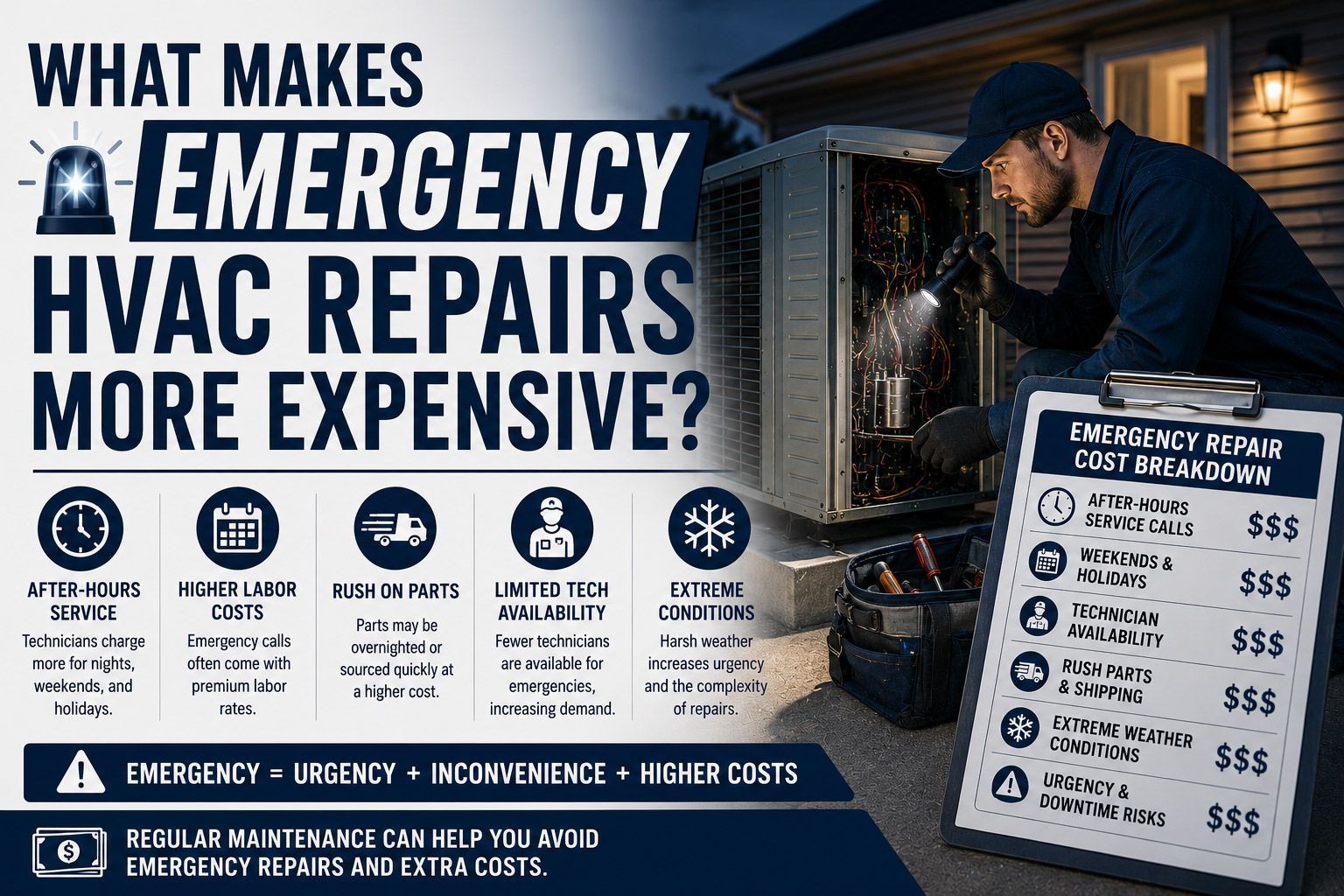
That timing is one reason emergency HVAC repairs usually cost more than standard service appointments.
Emergency situations create additional challenges beyond the repair itself. Immediate scheduling, after-hours labor, high seasonal demand, temporary safety concerns, and larger system damage often increase the overall complexity of the visit. In South Jordan and throughout Utah, where weather extremes place heavy demand on heating and cooling systems, emergency calls often happen during the busiest periods of the year.
Emergency Service Requires Immediate Scheduling
Routine HVAC maintenance can usually be scheduled days or weeks in advance. Emergency repairs work differently because the homeowner needs immediate assistance.
That urgency changes how HVAC companies allocate technicians, scheduling, and labor resources.
Priority Dispatch Increases Operational Demand
Emergency calls often require:
- Same-day scheduling
- After-hours availability
- Weekend service
- Nighttime dispatch
- Holiday scheduling
Maintaining technicians and vehicles ready for urgent service increases operational costs compared to regular daytime appointments.
Peak Weather Conditions Create Heavy Service Volume
In Utah, HVAC emergencies often happen during:
| Seasonal Condition | Common HVAC Emergency |
|---|---|
| Summer heat waves | AC failures |
| Winter cold snaps | Furnace breakdowns |
| Sudden temperature swings | System overload |
| Holiday weekends | Delayed maintenance failures |
During these periods, HVAC companies may receive significantly higher service demand than normal.
Delayed Repairs Often Become Larger Repairs
Many emergency breakdowns begin as smaller HVAC problems that were already developing earlier.
The system may continue operating temporarily while strain gradually increases behind the scenes.
Minor Issues Can Spread Through the System
A small unresolved problem may eventually affect additional components.
For example:
- Weak airflow increases runtime
- Longer runtime overheats components
- Electrical strain increases
- Larger parts begin failing
By the time the homeowner calls for emergency service, the repair is often much larger than the original issue.
Emergency Failures Commonly Involve Major Components
Urgent HVAC breakdowns frequently involve heavily stressed parts such as:
- Compressors
- Blower motors
- Ignition systems
- Electrical controls
- Capacitors
These repairs are often more expensive than preventive maintenance or early-stage repairs would have been.
After-Hours Labor Raises Repair Costs
Emergency HVAC service frequently happens outside standard business hours.
Even if the repair itself is relatively straightforward, labor costs often increase because technicians are working during nights, weekends, or holidays.
Extended Availability Requires Additional Staffing
Maintaining emergency availability may involve:
- On-call technicians
- Overtime scheduling
- Expanded dispatch coverage
- Late-night transportation
These operational demands contribute to higher emergency service pricing.
Repairs During Extreme Weather Can Be More Difficult
Emergency repairs sometimes occur under challenging conditions such as:
- Freezing outdoor temperatures
- Heavy snow
- Extreme summer heat
- Poor nighttime visibility
Difficult working conditions may slow diagnostics and repair procedures.
System Damage Is Often More Severe During Emergencies
When HVAC systems fail completely, the surrounding system may already be under significant strain.
Continuous Operation Creates Wear Before Failure
Many South Jordan homeowners continue using struggling systems while noticing symptoms such as:
- Weak airflow
- Unusual noises
- Inconsistent temperatures
- Rising utility bills
The system often keeps running until a critical component finally fails.
Overworked Components Can Trigger Chain Reactions
Emergency failures sometimes involve multiple damaged parts at once.
For example:
| Initial Problem | Secondary Damage Risk |
|---|---|
| Dirty condenser coil | Compressor overheating |
| Weak capacitor | Motor strain |
| Restricted airflow | Frozen evaporator coils |
| Ignition failure | Furnace cycling problems |
As strain spreads through the HVAC system, repair complexity increases.
Parts Availability Can Affect Emergency Pricing
Not every HVAC component is immediately available during emergency service situations.
Older or specialized systems may require harder-to-find parts.
Some Repairs Need Specialty Components
Certain systems use:
- Proprietary control boards
- Older refrigerants
- Specialized motors
- Brand-specific components
Emergency sourcing for these parts may increase repair cost and scheduling complexity.
Older HVAC Systems Are Often Harder to Repair Quickly
Aging systems sometimes involve:
- Obsolete components
- Limited replacement inventory
- Longer shipping times
- Compatibility concerns
This is especially common in older Utah homes with aging heating or cooling equipment.
Emergency HVAC Problems Can Affect Home Safety
Certain heating and cooling failures involve more than comfort alone.
Some emergency calls involve conditions that affect indoor safety or livability.
Winter Furnace Failures Create Urgent Heating Concerns
During cold Utah winters, a non-functioning furnace may create serious indoor temperature issues quickly.
This becomes especially important for:
- Families with children
- Elderly occupants
- Homes during freezing conditions
Urgent heating restoration often requires immediate scheduling regardless of cost.
Electrical or Gas Issues Require Immediate Attention
Certain HVAC emergencies may involve:
- Burning smells
- Electrical shorts
- Gas odor concerns
- System overheating
These situations require careful diagnostics and safety-focused repairs.
Lack of Maintenance Increases Emergency Risk
One of the biggest contributors to emergency HVAC repair cost is the absence of regular maintenance.
Many emergency breakdowns could have been identified earlier through routine inspections.
Maintenance Helps Identify Early Warning Signs
Routine servicing may detect:
- Weak capacitors
- Dirty coils
- Airflow restrictions
- Refrigerant issues
- Electrical wear
Addressing these smaller issues early often reduces the likelihood of sudden breakdowns later.
Neglected Systems Operate Under More Strain
Without maintenance, HVAC systems may experience:
| Maintenance Issue | Possible Emergency Outcome |
|---|---|
| Dirty filters | Blower strain |
| Low refrigerant | Compressor damage |
| Dirty coils | Overheating |
| Electrical wear | Sudden system shutdown |
Over time, these conditions increase the risk of major system failure during peak weather conditions.
Emergency Repairs Sometimes Lead to Replacement Decisions
In some situations, emergency repair costs become high enough that homeowners begin evaluating full system replacement instead.
Older Systems May Not Justify Large Emergency Repairs
Factors influencing replacement decisions often include:
- System age
- Repair frequency
- Efficiency decline
- Major component failure
For some homeowners, replacing the system becomes more practical than continuing repeated emergency repairs.
Frequently Asked Questions About Emergency HVAC Repairs
Why do emergency HVAC repairs cost more?
Emergency service often involves after-hours labor, immediate scheduling, and higher seasonal demand.
Do HVAC systems fail more often during extreme weather?
Yes. Systems experience heavier strain during very hot or very cold conditions.
Can delaying repairs increase emergency repair costs?
Yes. Smaller problems may spread through the system and damage additional components over time.
Why are older HVAC systems harder to repair during emergencies?
Older systems may require obsolete or harder-to-find replacement parts.
Can maintenance help prevent emergency breakdowns?
Routine servicing may help identify developing issues before major failures occur.
Conclusion
Emergency HVAC repairs often cost more because urgent service requires immediate scheduling, after-hours labor, and repairs during periods of extreme heating or cooling demand. In many cases, the breakdown itself has also been developing gradually, allowing additional strain and system damage to increase overall repair complexity.
For homeowners in South Jordan and throughout Utah, regular HVAC maintenance and early repairs may help reduce the likelihood of costly emergency breakdowns during the hottest and coldest times of the year. Hill Heating & Air provides heating and cooling services for homeowners looking to maintain reliable HVAC performance and indoor comfort throughout every season.