What Raises the Cost of Furnace Replacement in Utah?
May 31, 2026
Introduction
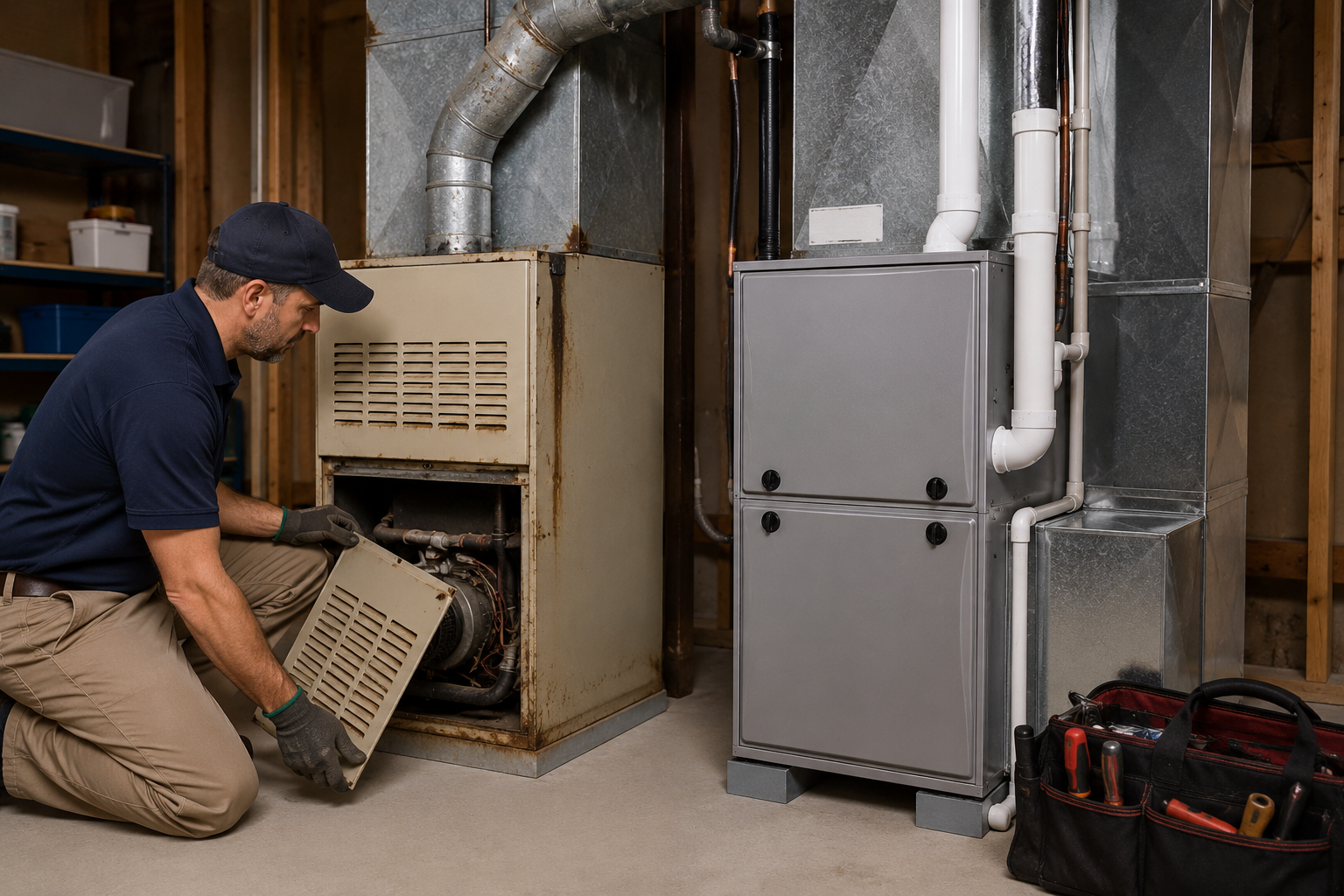
Two homes in South Jordan may both need a new furnace, yet the replacement cost can end up dramatically different between them. One installation moves quickly with minimal modifications, while another requires major venting updates, airflow adjustments, or additional system upgrades before the new furnace can even operate properly.
That difference is why furnace replacement pricing varies so much across Utah homes.
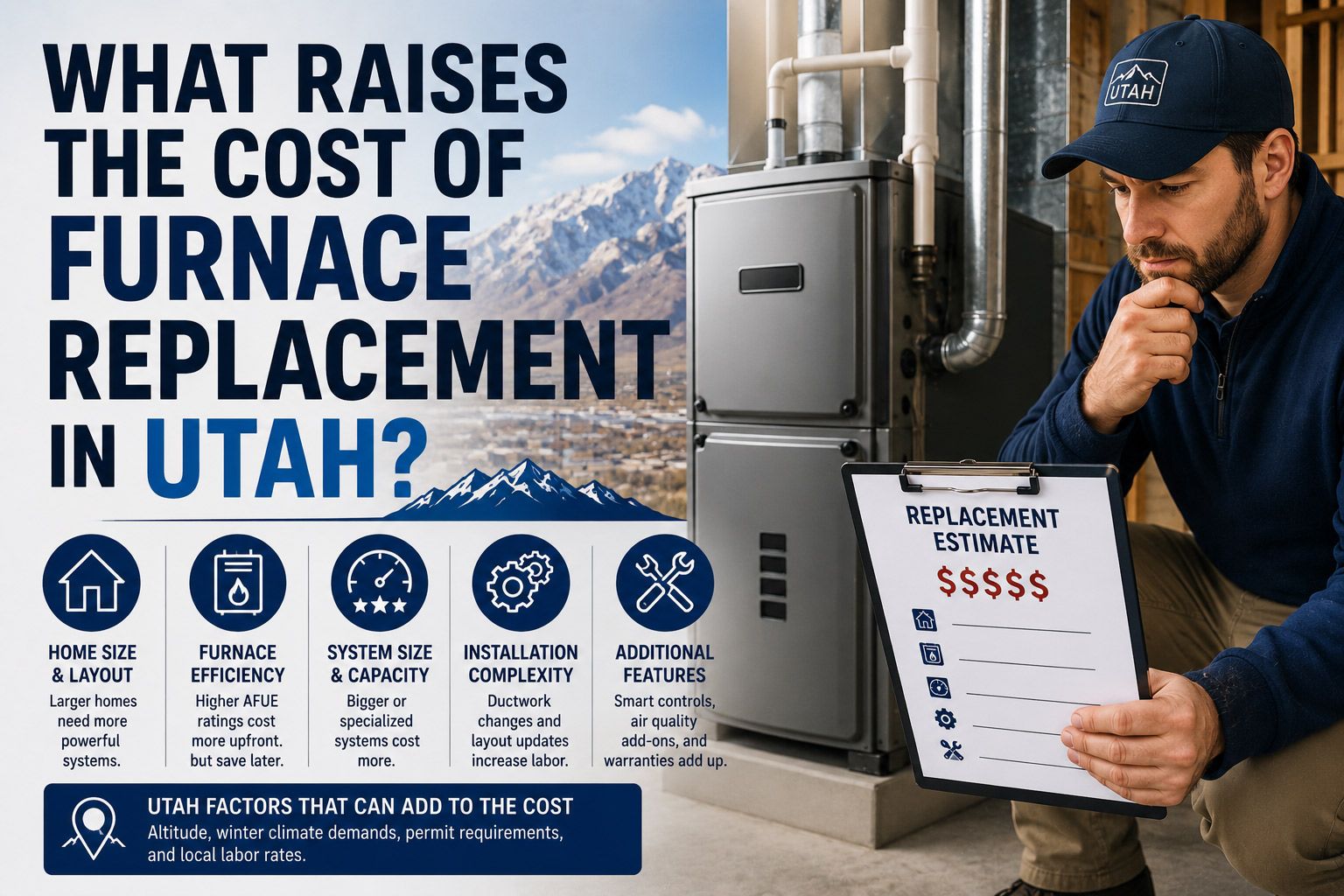
The furnace itself is only one part of the project. System efficiency, home size, ductwork condition, installation complexity, fuel type, and code requirements all affect the final cost. In many cases, the most expensive part of the job is not the equipment alone, but the additional work required to make the entire heating system function safely and efficiently.
Furnace Size Affects Both Equipment and Installation Costs
A furnace must be sized correctly for the home’s heating demand. Systems that are too small struggle during colder Utah weather, while oversized systems may cycle improperly and waste energy.
Because every home has different heating requirements, furnace capacity varies significantly between properties.
Larger Homes Usually Need Higher-Capacity Equipment
Several factors influence furnace sizing, including:
- Square footage
- Ceiling height
- Window efficiency
- Insulation quality
- Floor plan layout
Homes with larger heating demands often require stronger blower systems and higher BTU output, which increases equipment pricing.
Improper Sizing Creates Long-Term Problems
Some homeowners focus only on reducing upfront replacement cost and choose smaller systems that may not heat efficiently long-term.
Incorrect sizing can contribute to:
| Oversizing or Undersizing Issue | Possible Effect |
|---|---|
| Oversized furnace | Short cycling and uneven heating |
| Undersized furnace | Constant operation during winter |
| Weak airflow capacity | Poor temperature distribution |
| Incorrect blower sizing | Reduced system efficiency |
High-Efficiency Furnaces Usually Cost More Upfront
One of the largest pricing differences comes from furnace efficiency ratings.
Higher-efficiency systems are designed to convert more fuel into usable heat while reducing energy waste.
Advanced Efficiency Requires More Complex Components
High-efficiency furnaces often include:
- Secondary heat exchangers
- Variable-speed blowers
- Condensing technology
- Advanced control boards
These systems are more sophisticated than standard furnaces, which increases manufacturing and installation costs.
Efficiency Upgrades May Reduce Long-Term Heating Costs
Although higher-efficiency systems cost more initially, many Utah homeowners choose them because they may help reduce winter heating expenses over time.
The long-term value depends on factors such as:
- Home insulation
- Energy usage habits
- Winter heating demand
- Existing HVAC efficiency
Homes with heavy seasonal heating demand often see greater efficiency benefits.
Existing Ductwork Can Increase Replacement Costs
Furnace replacement is not always limited to swapping one unit for another.
Sometimes the existing duct system cannot support the airflow requirements of the new equipment properly.
Older Duct Systems May Restrict Performance
Problems with existing ductwork may include:
- Air leaks
- Undersized ducts
- Poor airflow balance
- Collapsed sections
- Inadequate return airflow
If airflow problems remain unresolved, even a brand-new furnace may struggle to heat the home efficiently.
Some Utah Homes Require Duct Modifications
In certain homes, furnace replacement may involve:
| Ductwork Adjustment | Why It May Be Needed |
|---|---|
| Return air upgrades | Improves airflow balance |
| Duct sealing | Reduces energy loss |
| Vent resizing | Supports proper circulation |
| New supply runs | Improves room heating |
The more airflow corrections required, the more labor-intensive the installation becomes.
Installation Complexity Changes Labor Requirements
Not every furnace replacement is equally straightforward.
The physical location of the system and the surrounding infrastructure often influence labor time significantly.
Tight Access Areas Increase Installation Difficulty
Furnaces installed in difficult locations may require additional labor, including:
- Crawlspaces
- Attics
- Small utility closets
- Basement corners
Restricted work areas slow down equipment removal and installation procedures.
Older Homes May Need Additional Upgrades
Some older South Jordan homes require modifications before a modern furnace can be installed safely.
This may involve updating:
- Gas lines
- Electrical connections
- Drainage systems
- Ventilation components
Code compliance upgrades can increase overall project cost even when the furnace replacement itself is relatively standard.
Venting Requirements Can Add Significant Cost
Modern high-efficiency furnaces often use different venting systems than older heating equipment.
This becomes especially important when replacing aging furnaces in older Utah homes.
New Venting May Be Required for High-Efficiency Systems
Condensing furnaces often require:
- PVC vent piping
- New exhaust routing
- Intake air piping
- Condensation drainage
If the existing venting system is incompatible, installation becomes more involved.
Improper Venting Affects Safety and Performance
Venting systems help manage combustion gases safely outside the home.
Incorrect venting may contribute to:
- Poor furnace operation
- Reduced efficiency
- Safety concerns
- Moisture issues
Because of this, venting upgrades are often necessary during replacement projects.
Fuel Type Influences Furnace Pricing
Different heating systems use different fuel sources, and that affects both equipment and installation requirements.
Gas Furnaces Are Common in Utah Homes
Natural gas systems are popular because they generally provide strong heating performance during cold winters.
However, gas furnaces require:
- Gas supply connections
- Combustion safety systems
- Ventilation infrastructure
These components affect installation complexity.
Electric Furnaces Have Different Requirements
Electric systems avoid gas venting but may require:
- Electrical panel upgrades
- Higher electrical capacity
- Different airflow configurations
The overall project cost depends heavily on the home’s existing infrastructure.
Additional HVAC Problems May Be Found During Replacement
Sometimes a furnace replacement project reveals additional issues already affecting the HVAC system.
Those problems may not become obvious until installation begins.
Existing System Damage Can Increase Scope
Technicians sometimes discover:
- Blower motor wear
- Damaged ductwork
- Thermostat issues
- Airflow restrictions
- Electrical concerns
Addressing these issues during installation often helps improve overall heating performance.
Thermostat and Control Upgrades Are Sometimes Needed
Modern furnaces may require compatible control systems that older thermostats cannot support properly.
This is especially common with:
- Variable-speed furnaces
- Smart thermostats
- Zoned HVAC systems
Control upgrades increase functionality but also affect overall replacement cost.
Seasonal Timing Can Affect Pricing and Scheduling
Furnace replacement demand often increases dramatically during colder weather in Utah.
Emergency Replacements Usually Cost More
When a furnace fails during winter, homeowners may need immediate installation service during peak demand periods.
Emergency situations sometimes involve:
- Faster scheduling
- Overtime labor
- Limited equipment availability
- Temporary heating concerns
Planned replacement projects are usually easier to schedule than emergency winter breakdowns.
Frequently Asked Questions About Furnace Replacement Costs
Why do furnace replacement prices vary so much?
Pricing depends on furnace size, efficiency, installation complexity, ductwork condition, and home infrastructure.
Do high-efficiency furnaces cost more?
Yes. Higher-efficiency systems use more advanced components and installation requirements.
Can old ductwork affect furnace replacement cost?
Yes. Damaged or undersized ductwork may require modifications for proper airflow.
Why do older homes sometimes cost more to upgrade?
Older homes may need gas, electrical, venting, or code-related updates before installation.
Does furnace size affect installation cost?
Larger-capacity systems generally require more powerful components and airflow support.
Conclusion
Furnace replacement costs in Utah can vary significantly depending on system efficiency, home size, ductwork condition, installation difficulty, and the overall condition of the HVAC system. In many homes, the replacement project involves much more than simply installing a new furnace unit alone.
For homeowners in South Jordan and throughout Utah, understanding what affects furnace replacement pricing can help make heating upgrades more practical and better suited for long-term comfort and efficiency. Hill Heating & Air provides heating installation and HVAC services for homeowners looking to improve system reliability and indoor comfort throughout the region.