Why Is My AC Running but Not Cooling the House?
September 4, 2026
When the AC Runs All Day but the House Stays Warm
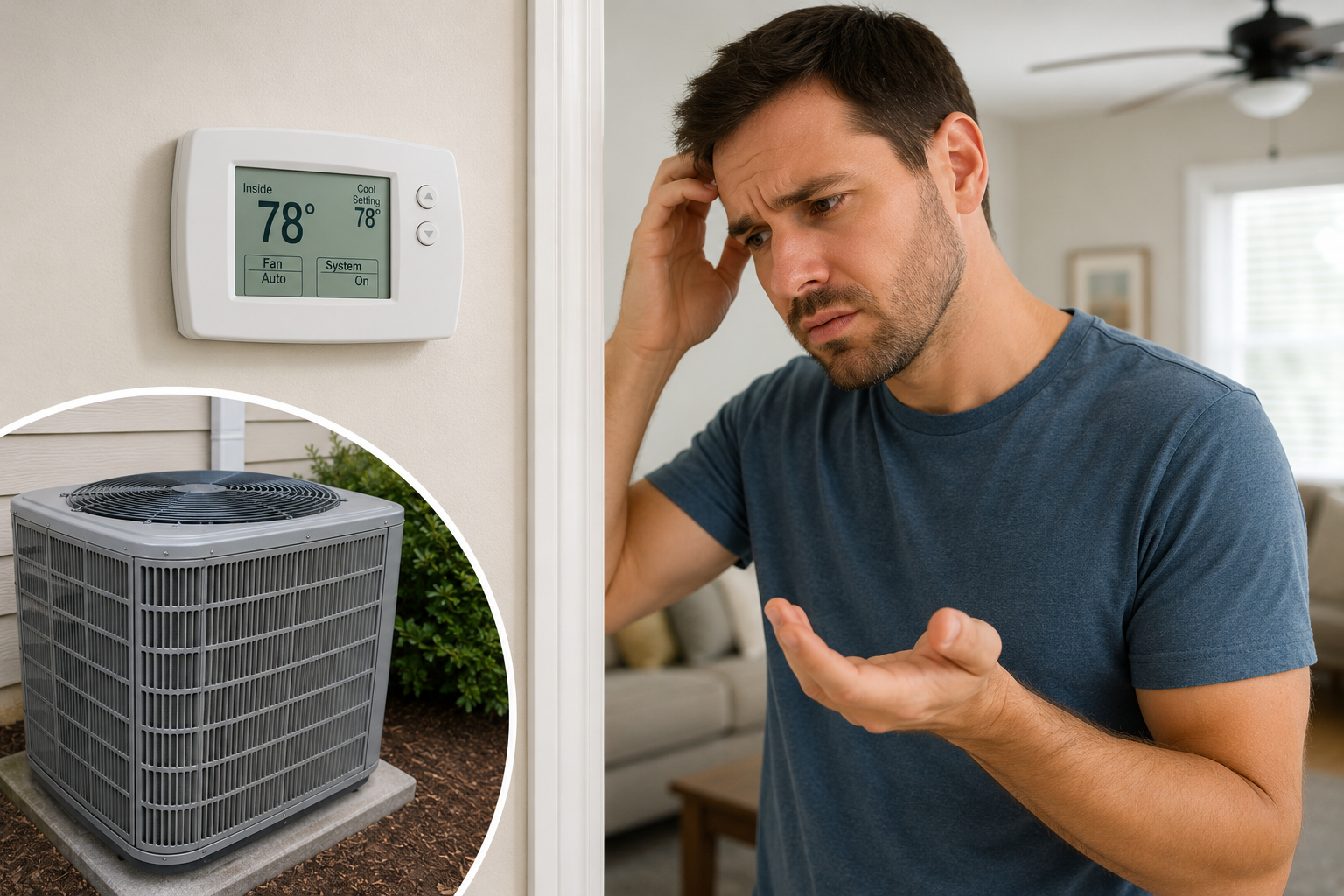
You can hear the system running. The vents are blowing. The thermostat is set where it always is. But the temperature inside your Salt Lake City, Utah home will not budge — and the hours keep passing. This is one of the most common complaints HVAC technicians hear during summer, and it rarely means the entire system needs to be replaced.
Most cases come down to one of four causes, each with a clear explanation and a clear fix. Working through them systematically is the fastest way to get your home comfortable again.
A Refrigerant Leak Is Starving the System of Cooling Power
Refrigerant is the substance that actually absorbs heat from your indoor air and moves it outside. When refrigerant levels drop — almost always due to a leak somewhere in the system — the AC loses its ability to remove heat, no matter how long it runs. The compressor keeps cycling, the fan keeps blowing, but nothing meaningful is happening.
One early sign is ice forming on the refrigerant lines near the outdoor unit or on the indoor air handler. That frost is a symptom of a system trying to function without enough refrigerant to operate correctly. In Salt Lake City, where summer temperatures regularly push past 100 degrees Fahrenheit, even a small refrigerant deficit becomes a significant cooling failure within days.
This is not a DIY repair. Refrigerant handling requires EPA Section 608 certification, and topping off the charge without locating and sealing the leak first means the problem returns within weeks. A licensed technician needs to find the source, repair it, and recharge the system properly.
A Clogged Air Filter Is Blocking Airflow to the Coil
The air filter sits at the entry point of your system and catches dust, pet hair, and debris before they reach the internal components. When it clogs — and in Utah summers, filters can go from clean to fully blocked in four to six weeks — airflow drops sharply. Without adequate air moving across the evaporator coil, the coil freezes over. A frozen coil cannot absorb heat, which means the system runs continuously while delivering almost no cooling.
This is the most preventable cause on this list. Check your filter before calling for service. If it looks gray and dense rather than white and open, replace it. Many homeowners have resolved this problem without a service call simply by swapping out a $15 filter.
Dirty Coils Are Blocking Heat Transfer
Your AC system has two coils: the evaporator coil inside your home, which absorbs heat from the air, and the condenser coil outside, which releases that heat into the outdoor air. When either coil is coated with grime, the heat transfer process slows significantly — and the system runs longer and harder without ever reaching the set temperature.
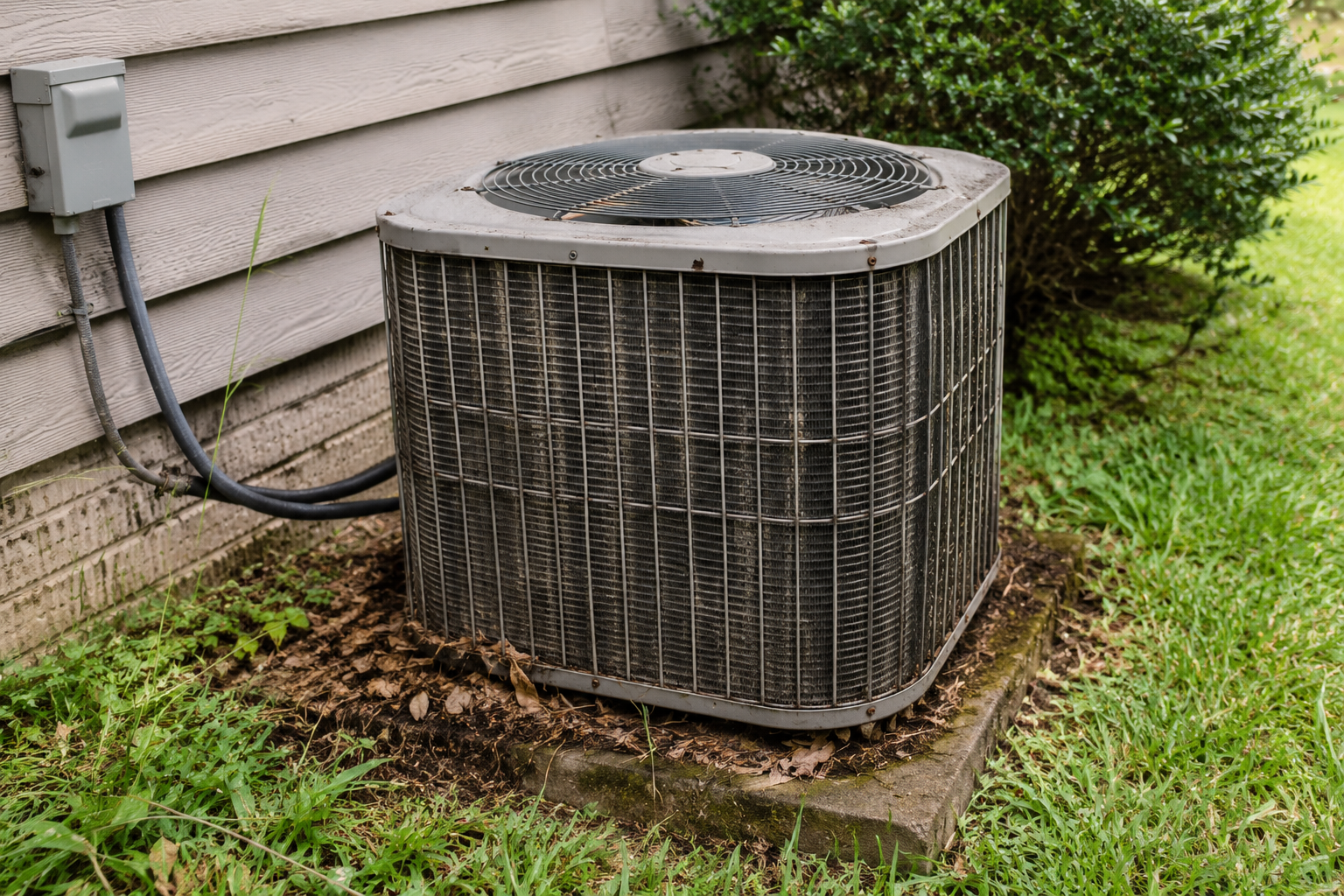
Salt Lake City homeowners face a specific seasonal challenge here. Cottonwood season each spring coats outdoor condenser units with fine, fiber-like material that packs into the coil fins and dramatically reduces efficiency. By the time summer arrives, a condenser that was not cleaned after cottonwood season may already be working at a fraction of its designed capacity. Gentle hosing of the condenser unit or a professional coil cleaning before the cooling season starts is one of the most impactful preventive steps available.
The System Was Never Sized for Your Home's Cooling Load
Sometimes the problem is not a component failure at all — it is that the system was never the right size for the space it serves. This is more common than most homeowners expect, particularly in older Salt Lake City homes that have been remodeled, had rooms added, or had significant window upgrades since the original HVAC installation.
An undersized system will run almost continuously during peak summer heat without ever catching up to the thermostat setting. Several factors compound the problem.
Insulation and Attic Heat Gain
Poor attic insulation allows radiant heat to drive indoor temperatures up faster than the system can remove it. Even a correctly sized AC can struggle in a home with inadequate insulation. Upgrading insulation often improves cooling performance without touching the HVAC system at all.
Duct Leakage
Leaky ductwork bleeds conditioned air into unconditioned spaces like attics and crawlspaces before it reaches the rooms you are trying to cool. A system losing 20 to 30 percent of its air through duct leaks effectively becomes undersized overnight. Duct sealing is frequently the highest-return HVAC improvement available in older homes across Salt Lake City, Utah.
A Manual J Load Calculation
The only reliable way to know whether the system is correctly sized is a Manual J load calculation performed by a licensed HVAC contractor. This accounts for square footage, ceiling height, insulation levels, window area and orientation, and local climate data specific to Salt Lake City, Utah. Two homes with identical square footage can require meaningfully different equipment.
Frequently Asked Questions
My AC is running but the air from the vents is not cold. What does that mean?
If the fan is running but the air feels warm or room temperature, the most likely culprits are a refrigerant problem, a frozen evaporator coil, or the outdoor condenser unit not running at all. Step outside and check whether the outdoor unit is operating. If only the indoor air handler is running, a safety switch or electrical issue may have shut the outdoor unit down independently.
How do I know if my evaporator coil is frozen?
Look for ice forming on the copper refrigerant lines near the indoor unit, or on the unit itself. You may also notice reduced airflow from vents and water pooling beneath the air handler as ice thaws. If you spot these signs, switch the system to fan-only mode to allow it to thaw, check the filter immediately, and call a technician if cooling does not return once the coil is clear.
Can a faulty thermostat make the AC seem like it is not cooling?
Yes. A thermostat that is reading the room temperature inaccurately may satisfy the cooling call prematurely, shutting the system off before the space has actually reached the set point. Start by replacing the thermostat batteries. If the problem persists, a technician can verify whether the thermostat is communicating the correct signals to the system.
Why does my AC keep the house cool at night but struggle during the day?
This is a capacity issue, not a mechanical failure. During the cooler overnight hours the system keeps up. But at peak afternoon heat — especially in Salt Lake City where temperatures climb well into the 90s and beyond — an undersized, dirty, or refrigerant-low system cannot match the heat gain coming through windows and the roof. Consistent daytime-only cooling failure points to a load capacity problem worth investigating.
How often should I check my air filter in summer?
Monthly checks are the minimum standard during the cooling season. In homes with pets, during cottonwood season, or in dusty valley conditions common to Salt Lake City, Utah, check every two to three weeks. Replace the filter as soon as it looks visibly gray rather than white — do not wait until a scheduled change date if it is already congested.
Getting Your Home Cool Again
An AC that runs without cooling is not just uncomfortable — during peak summer heat in Salt Lake City, Utah, it can become a genuine health concern, particularly for older residents and young children. The good news is that the most common causes are identifiable and fixable, often without a full system replacement.
Hill Heating & Air diagnoses these situations for homeowners throughout Salt Lake City every season. A trained technician can determine in a single visit whether the issue is refrigerant, a dirty coil, an undersized unit, or something else — and give you a clear, honest path forward. If the system is running but the house is not cooling,
reach out and schedule a diagnostic visit before the heat gets worse.