Is It Cheaper to Repair or Replace an Old Furnace?
September 25, 2026
A Decision That Feels Urgent and Expensive at the Same Time
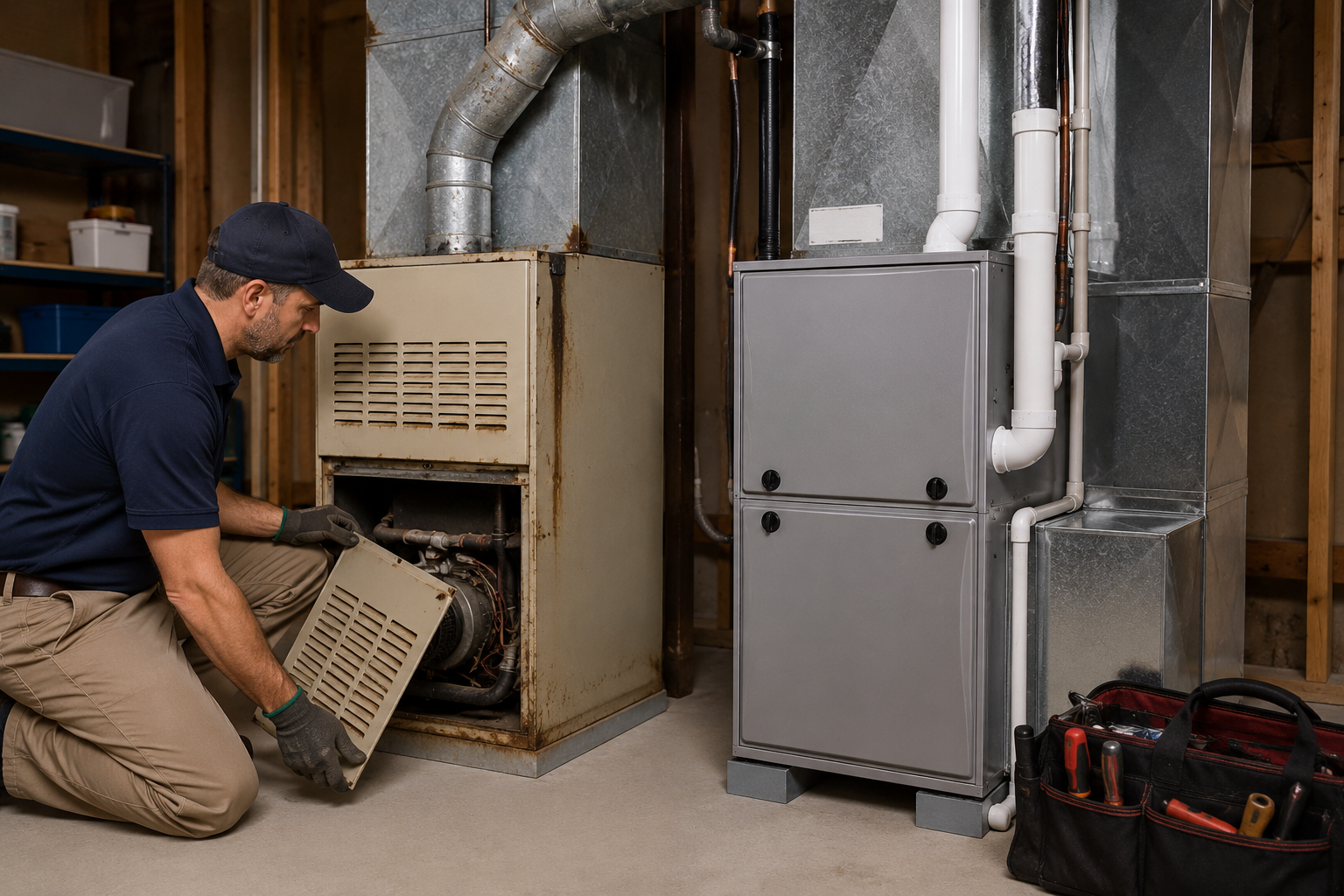
A furnace breakdown in the middle of a Salt Lake City, Utah winter does not give you much time to deliberate. The pressure to get heat restored quickly can push homeowners into decisions that feel right in the moment but cost more in the long run — or cost more upfront when a repair would have been perfectly sound. Neither outcome is ideal.
The answer to this question is almost never obvious from the outside. It depends on the age of the system, the nature of the failure, and the cost trajectory of keeping aging equipment running. What follows is the framework that actually makes the call clear.
Age Is the Single Most Important Variable
A gas furnace is designed to last 15 to 20 years. Below ten years old, a well-maintained furnace with an isolated component failure is almost always worth repairing — assuming the repair cost is reasonable. The math tilts decisively the other way as a system crosses the 15-year mark.
The reason is not just about the age itself. An older furnace is a less efficient one by design. Modern high-efficiency units carry AFUE ratings of 80 to 98 percent, converting nearly all consumed fuel into usable heat. A furnace from the early 2000s may be operating at 60 to 70 percent AFUE. In Salt Lake City, Utah, where heating season runs hard from October through March, that efficiency gap shows up as real money on every gas bill.
Pouring repair money into a system that is simultaneously losing efficiency and nearing end-of-life is paying twice — once for the fix, and once for the ongoing inefficiency.
The Industry Rule of Thumb for Making the Call
The most widely used framework in the HVAC industry is the age-times-repair-cost calculation. Multiply the age of the furnace in years by the dollar cost of the proposed repair. If the result exceeds the installed cost of a replacement system, replacement is the better investment.
To illustrate: a 14-year-old furnace facing a $500 repair produces a calculation of $7,000. A new furnace installed in a Salt Lake City, Utah home typically runs $3,500 to $7,500 all-in. At that overlap, replacement starts to make more sense financially. A 6-year-old furnace with the same $500 repair calculates to $3,000 — well below the cost of a new system, making repair the clear answer.
This rule is a guide, not a verdict. It works best alongside an honest assessment of how many additional repairs the aging system is likely to need in the next two or three years.
Repair vs. Replace: A Side-by-Side Comparison
The following table summarizes the key differences across the factors that matter most when evaluating this decision.
| Factor | Repair | Replace |
|---|---|---|
| Upfront cost | $150–$1,200 typical | $3,500–$7,500+ installed |
| Long-term cost | More repairs likely on aging system | Predictable for 15–20 years |
| Monthly energy cost | No change — same old efficiency | Likely lower with high-AFUE unit |
| Equipment warranty | Parts only, if applicable | New equipment and labor warranty |
| Best candidate | Under 10 years old, isolated failure | 15+ years old, repeated repairs |
| Risk level | Low if failure is minor | Low — known cost, fresh start |
When Each Option Makes the Most Sense
The right choice narrows quickly once you know which category your situation falls into. These are the conditions that point clearly toward each path.
Repair Is the Right Call When
- The furnace is under 10 years old and the failure is a single, isolated component
- The repair cost is under $500 and the system has been running reliably
- You plan to sell the home within one to two years and replacement does not improve your return
- The failed part is not the heat exchanger or compressor — those signal deeper wear
Replacement Is the Right Call When
The furnace is 15 or more years old and has needed multiple repairs in recent seasons
- The heat exchanger is cracked — this is a carbon monoxide safety issue and replacement often costs more than a new system
- Heating bills have been steadily climbing without any change in usage or rates
- The furnace struggles to hold temperature in colder Salt Lake City, Utah winters, running almost continuously
- The system uses R-22 refrigerant or other phased-out components no longer in production
Frequently Asked Questions
Is a 20-year-old furnace ever worth repairing?
Rarely. A furnace at 20 years has exceeded its design life, and even a successful repair typically buys one to two more seasons before the next failure. The efficiency gap alone — compared to a modern 96 percent AFUE unit — means the monthly savings on a new system often offset a meaningful share of the replacement cost within three to five years.
What is the most expensive single repair a furnace can need?
Heat exchanger replacement. Depending on the unit, this runs $1,000 to $2,500 or more in parts and labor. A cracked heat exchanger also poses a carbon monoxide risk, which changes the risk profile entirely. On any system older than 12 years, the repair cost of a cracked exchanger almost always favors full replacement.
How much can I realistically save on heating bills with a new high-efficiency furnace?
The savings depend on what you are replacing. Moving from a 70 percent AFUE system to a 96 percent model reduces fuel consumption by roughly 27 percent. For a Salt Lake City, Utah household spending $300 per month on gas heating in peak winter months, that is approximately $80 per month in savings — or nearly $1,000 over a full heating season.
How long does a furnace replacement take?
Most standard residential replacements take four to eight hours for a professional crew. Complex jobs involving ductwork modifications or difficult equipment access can take a full day. In nearly all cases, you will have heat restored the same day the old unit is removed.
Are there rebates available for new furnaces in Utah?
Yes. Dominion Energy (formerly Questar Gas) offers rebates for upgrading to 95 percent AFUE or higher equipment, typically $100 to $300. Rocky Mountain Power has additional programs for qualifying energy-efficient upgrades. Federal tax credits under the Inflation Reduction Act may also apply, potentially up to $600 for a qualifying unit. Ask your contractor for current program details when gathering quotes.
Making the Call With Confidence
The repair-or-replace question does not have to feel like a gamble. Age, efficiency, repair cost, and the pattern of past failures are all measurable — and together they point clearly in one direction for most homeowners. In Salt Lake City, Utah, where a functioning furnace is not a luxury from October through March, getting this decision right matters for both comfort and the household budget.
Hill Heating & Air helps homeowners make this evaluation every season without pressure. The goal is always a clear, honest recommendation based on what the equipment actually shows — not what generates the larger sale. If your furnace is aging or acting up,
reach out for a diagnostic visit and a straight answer about where you stand.