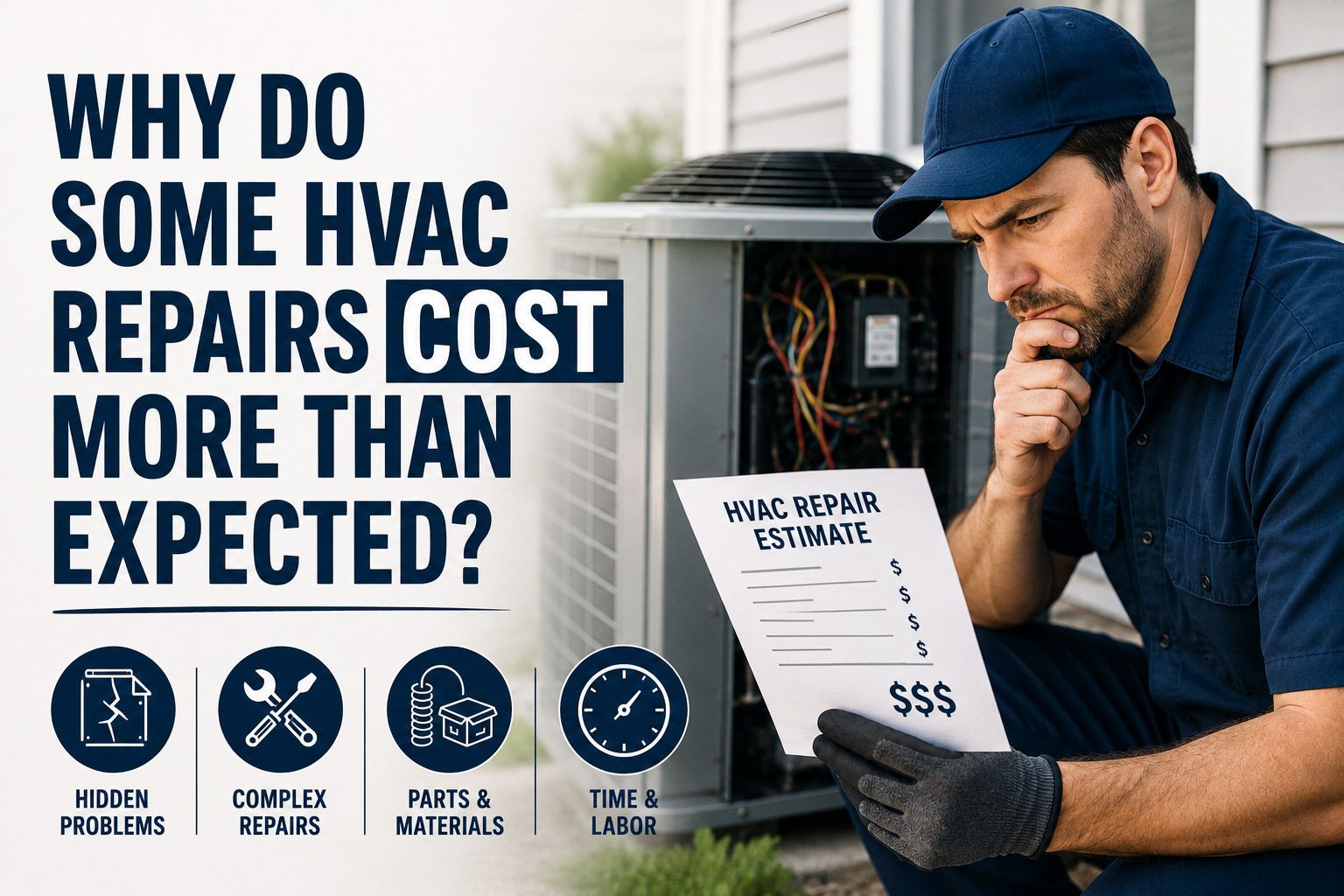
Why Do Some HVAC Repairs Cost More Than Expected?
May 4, 2026
Introduction
An HVAC repair sometimes starts with what seems like a small issue. The air conditioner stops cooling properly during a hot South Jordan afternoon, or the furnace begins making unusual noises late at night. A homeowner expects a quick repair, only to discover the final cost is much higher than anticipated.
That usually happens because HVAC systems are more interconnected than most people realize. A symptom that appears minor at the surface may involve deeper electrical, airflow, refrigerant, or component-related problems inside the system itself.
Repair pricing can also change depending on the age of the equipment, how long the issue has been developing, the availability of replacement parts, and whether the repair happens during peak heating or cooling demand in Utah. Understanding these factors helps explain why two HVAC repairs that sound similar may end up having very different costs.
The Original Problem Is Not Always the Actual Problem
One reason HVAC repairs sometimes become more expensive is because the visible symptom is only part of the issue.
For example, weak airflow may not simply mean a dirty filter. The problem could involve blower motor strain, duct restrictions, frozen evaporator coils, or electrical issues affecting airflow throughout the system.
HVAC Systems Depend on Multiple Components Working Together
Heating and cooling systems rely on connected parts operating in balance.
A single problem may affect:
- Airflow
- Temperature regulation
- Electrical performance
- Refrigerant pressure
- System cycling
Because these systems work together, one failing component can create additional strain elsewhere if left unresolved.
Delayed Repairs Often Lead to Larger Failures
Small HVAC issues rarely stay small forever.
In many South Jordan homes, repair costs increase because the system continues running while already under stress. Over time, that extra strain may damage additional parts.
For example:
| Early Issue | Potential Larger Repair Later |
|---|---|
| Dirty condenser coil | Compressor strain |
| Weak airflow | Frozen evaporator coil |
| Failing capacitor | Motor damage |
| Refrigerant leak | Compressor overheating |
| Dirty filter | Blower motor stress |
The longer the system operates inefficiently, the greater the chance of secondary damage developing.
System Age Plays a Major Role
Older HVAC systems are often more expensive to repair because the equipment itself becomes harder to service over time.
In some cases, replacement parts may no longer be readily available, especially for outdated models.
Older Systems Usually Have More Wear Overall
As HVAC systems age, several components may already be nearing the end of their service life simultaneously.
This often includes:
- Capacitors
- Blower motors
- Heat exchangers
- Contactors
- Compressors
A repair that seems isolated may reveal additional worn parts once diagnostics begin.
Obsolete Parts Can Increase Repair Costs
Some older systems require specialty parts that are:
- Harder to locate
- More expensive to order
- Slower to ship
- Less commonly stocked
This is especially common with aging air conditioning systems using discontinued refrigerants or outdated electrical components.
Refrigerant Problems Often Increase Repair Pricing
Air conditioning repairs involving refrigerant are frequently more expensive than homeowners initially expect.
That is because refrigerant problems usually involve more than simply “adding more coolant.”
Refrigerant Loss Usually Means There Is a Leak
Modern AC systems operate as sealed systems. If refrigerant levels are low, the system typically has a leak somewhere.
Repairing the issue may involve:
- Leak detection
- Coil inspection
- Line repair
- Pressure testing
- Refrigerant recharge
The complexity depends on where the leak is located and how severe it has become.
Older Refrigerants Can Raise Costs Further
Some older HVAC systems still use outdated refrigerants that are becoming increasingly expensive and less available.
As supply decreases, the cost of servicing those systems often rises significantly.
In some situations, homeowners throughout South Jordan may eventually face the decision between major refrigerant repairs and full system replacement.
Emergency Repairs Usually Cost More
Timing affects HVAC repair pricing more than many homeowners realize.
Emergency service during extreme Utah temperatures often involves additional operational demands for HVAC contractors.
Peak Heating and Cooling Seasons Increase Demand
South Jordan HVAC companies often experience heavy service demand during:
- Summer heat waves
- Winter cold snaps
- Holiday weekends
- Sudden weather changes
During peak periods, emergency scheduling may require additional staffing or extended service hours.
After-Hours Repairs Involve Additional Costs
Emergency repairs may include factors such as:
| Emergency Factor | Why It Raises Cost |
|---|---|
| After-hours service | Extended labor availability |
| Weekend scheduling | Higher operational demand |
| Immediate dispatch | Priority scheduling |
| Extreme weather demand | Increased service volume |
The repair itself may not change, but the timing and urgency often do.
Accessibility Can Affect Labor Time
Not every HVAC system is easy to access.
Some repairs take much longer simply because technicians must work in difficult spaces throughout the home.
Tight Installation Areas Increase Labor Complexity
Systems located in certain areas may require additional time and effort, including:
- Crawlspaces
- Attics
- Rooftop units
- Tight utility closets
Restricted working conditions slow down diagnostics and repair procedures.
Larger Homes May Have More Complex HVAC Layouts
Some South Jordan homes use:
- Multi-zone systems
- Dual furnaces
- Multiple thermostats
- Extended duct systems
These setups often require more extensive troubleshooting because multiple components interact throughout the home.
Electrical Problems Can Be More Complicated Than Expected
Electrical issues are one of the most unpredictable categories of HVAC repair.
A simple symptom may involve several possible causes behind the scenes.
HVAC Electrical Systems Include Multiple Components
Electrical troubleshooting may involve checking:
- Capacitors
- Wiring connections
- Circuit boards
- Relays
- Thermostat communication
- Voltage readings
Because electrical problems sometimes overlap, diagnosis can take longer than homeowners expect.
Intermittent Problems Are Harder to Trace
Some HVAC systems only fail under specific operating conditions.
For example:
- The system works during cooler mornings
- The breaker trips only during heavy cooling cycles
- The blower shuts off intermittently
These situations often require deeper testing to identify the root cause accurately.
Poor Maintenance Often Leads to More Expensive Repairs
Regular maintenance helps identify smaller HVAC problems before they escalate into larger system failures.
Without routine servicing, issues may continue developing unnoticed.
Dirt and Restricted Airflow Create Additional Strain
Lack of maintenance commonly contributes to:
- Dirty evaporator coils
- Clogged filters
- Blocked condenser units
- Reduced airflow
These conditions force the HVAC system to work harder during operation.
Small Maintenance Problems Compound Over Time
Neglected systems often develop multiple smaller issues together rather than one isolated failure.
For example:
- Dirty coils reduce cooling efficiency
- Reduced airflow increases system strain
- Longer run times overheat components
- Electrical parts wear down faster
Eventually, the homeowner faces a much larger repair than the original maintenance issue would have required.
Repair Costs Sometimes Reflect Efficiency and Safety Concerns
Certain repairs are not only about restoring heating or cooling. Some directly affect safety or system reliability.
Furnace Repairs May Involve Safety Components
Heating repairs may include inspection of:
- Heat exchangers
- Gas valves
- Ignition systems
- Ventilation safety controls
Because these components affect safe furnace operation, repairs often require careful testing and verification.
Efficiency Problems Can Raise Utility Costs Too
A struggling HVAC system may continue operating while consuming far more energy than normal.
Homeowners sometimes notice:
- Higher utility bills
- Uneven temperatures
- Longer cooling cycles
Repairing the issue may improve both comfort and operating efficiency throughout the home.
Frequently Asked Questions About HVAC Repair Costs
Why do HVAC repairs sometimes become more expensive after diagnosis?
The visible symptom may only reveal part of the underlying problem affecting the system.
Does delaying HVAC repair increase costs?
Yes. Continued operation under strain may damage additional components over time.
Why are refrigerant repairs often expensive?
Refrigerant problems usually involve leak detection, system testing, and refrigerant recharge procedures.
Do older HVAC systems cost more to repair?
Older systems may require harder-to-find parts and often have multiple aging components at once.
Why do emergency HVAC repairs cost more?
After-hours scheduling, peak demand periods, and urgent dispatch service often increase operational costs.
Conclusion
HVAC repair costs can vary widely because heating and cooling systems involve complex components that often affect one another when problems develop. What appears to be a simple issue may involve deeper airflow, refrigerant, electrical, or mechanical problems that require more extensive diagnostics and repair work.
For homeowners in South Jordan and throughout Utah, understanding what influences HVAC repair pricing can help prevent delayed service and larger system failures later. Hill Heating & Air provides heating and cooling services for homeowners looking to maintain reliable HVAC performance throughout every season.